
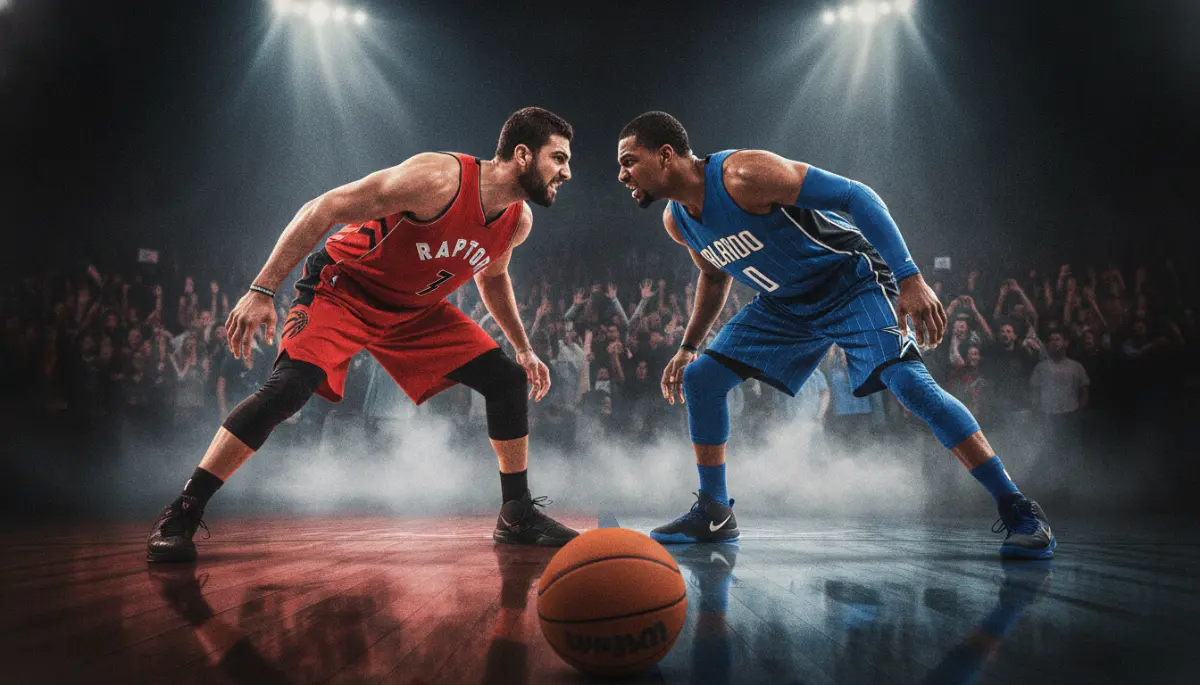
The Toronto Raptors return to Scotiabank Arena on Wednesday, October 28, hoping to turn the page after their first loss of the 2026–27 NBA season. Toronto began the campaign with two victories, but a 117–94 setback against the Minnesota Timberwolves exposed concerns about the team’s ability to maintain a reliable half-court offense.
The Orlando Magic present a difficult response test. They arrive in Toronto after defeating the New York Knicks on the road, a result that restored confidence following losses to Atlanta and Minnesota. With significant players unavailable on both sides, this Eastern Conference matchup will place unusual importance on depth, adaptability, and secondary scoring.
Game Information and Immediate Series Context
Wednesday’s contest begins at 7:30 p.m. ET at Scotiabank Arena. Canadian viewers can watch the game on TSN, while Toronto enters with a 2–1 record and Orlando sits at 1–2.
The matchup is also the opening game of a short two-game meeting in Toronto. The Raptors and Magic will face each other again on Friday, October 30, in NBA Cup group play. That compressed schedule gives both teams a rare chance to study the same opponent, identify weaknesses, and make rapid adjustments.
- Matchup: Orlando Magic at Toronto Raptors
- Date: Wednesday, October 28, 2026
- Tip-off: 7:30 p.m. ET
- Location: Scotiabank Arena in Toronto
- Toronto record: 2–1
- Orlando record: 1–2
- Canadian broadcast: TSN
Toronto’s Main Challenge: Rebuild the Offense
The Raptors looked sharp in their first two games. They overwhelmed the Chicago Bulls 135–92 and then handled the Washington Wizards 112–102, establishing an attacking identity built around pace and several capable creators.
Minnesota disrupted that rhythm. Toronto scored only 94 points, struggled to create clean looks in the half court, and rarely found the consistent offensive flow that had defined the opening week. The defeat was not simply a poor shooting night; it also highlighted how dependent the Raptors can become on individual creation when their passing movement slows.
Scottie Barnes will be central to the response. After producing 28 points and 14 rebounds against Washington, the versatile forward went scoreless in 28 minutes against the Timberwolves. A more aggressive Barnes would give Toronto an important advantage because he can initiate offense, attack mismatches, rebound from the wing, and create opportunities for teammates.
Players Who Must Carry More Responsibility
Toronto’s injuries require its available players to divide the workload rather than wait for one scorer to solve every possession. RJ Barrett remains one of the team’s most dependable downhill attackers, while Immanuel Quickley must help organize the offense and keep the tempo under control.
Ja’Kobe Walter also offers an encouraging shooting option. The young guard scored 22 points against Minnesota, showing that he can provide needed production when opposing defenses focus on Toronto’s established names.
- Scottie Barnes: Toronto needs his all-around impact and greater scoring assertiveness.
- RJ Barrett: His ability to pressure the rim could relieve some of the team’s perimeter burden.
- Immanuel Quickley: His ball handling and playmaking will be important against Orlando’s athletic defense.
- Ja’Kobe Walter: His outside shooting can punish the Magic if they collapse on Toronto’s primary creators.
The Raptors will have a better chance of controlling the game if these contributions arrive together. A balanced attack would make it more difficult for Orlando to load up on Barnes or force Toronto into late-clock isolation possessions.
Why Orlando Believes It Can Win on the Road
Orlando’s opening week has been uneven, but its latest performance provided a significant boost. After falling to Atlanta and Minnesota, the Magic went to New York and earned a 111–102 victory over the Knicks on October 25.
The result carried extra weight because Paolo Banchero was unavailable. Rather than allowing his absence to derail the offense, Orlando received a complete performance from Franz Wagner, who finished with 23 points, 13 rebounds, and nine assists.
Desmond Bane added 22 points, while Tristan da Silva and Anthony Black supplied useful support. The performance showed that Orlando can create enough offense through multiple players, even when one of its primary stars is missing.
Wagner and Bane Create Different Problems
Wagner is likely to be the Magic’s most influential offensive player again. His size and versatility allow him to score from the perimeter, drive into open space, and find teammates when Toronto sends help. The Raptors cannot afford to let him build momentum in transition or dictate the game as a passer.
Bane presents a separate challenge. His perimeter shooting can quickly change the scoreboard if Toronto loses track of him during rotations. The Raptors must communicate clearly, close out under control, and avoid giving Orlando easy three-point attempts after defensive breakdowns.
If Wagner consistently draws attention and Bane converts open jumpers, Orlando can compensate for the missing production of its injured players. Toronto’s defense will therefore need to defend both the initial action and the second pass that creates an open shooter.
Injuries Could Shape the Tactical Plan
Toronto will be without Kawhi Leonard, who is dealing with swelling in his left knee. The veteran forward is expected to miss at least a week, removing an important two-way presence from the Raptors’ rotation.
Orlando has an even longer list of significant absences. Banchero is sidelined by a high-ankle sprain, Jalen Suggs is unavailable because of a knee injury, and Jonathan Isaac is also ruled out.
Those absences affect more than the final box score. Toronto must replace Leonard’s scoring, defensive versatility, and experience, while Orlando needs to manufacture offense without Banchero and Suggs and absorb Isaac’s defensive contributions.
The injuries could also influence substitutions. Coaches may rely more heavily on smaller lineups, ask role players to handle the ball, or use conservative offensive sets designed to reduce turnovers. The team that adjusts most effectively to those altered rotations may gain an advantage before its stars have a chance to decide the game.
Three Matchups That Deserve Close Attention
Barnes Against Orlando’s Help Defense
Barnes’ response after a scoreless outing will be one of the clearest storylines. Orlando may send early help when he drives, challenging him to make quick decisions rather than allowing him to attack a single defender repeatedly.
Toronto should look for ways to involve Barnes before the defense is fully set. Early post touches, handoffs, and transition opportunities could help him establish rhythm and encourage a more forceful offensive approach.
Toronto’s Closeouts Against Bane
Bane does not need many open attempts to become a major factor. Toronto’s perimeter defenders must stay connected through screens and recover quickly when the ball moves from Wagner to the wing.
Overhelping on drives could create the exact shots Orlando wants. The Raptors will need to protect the paint without abandoning shooters, especially during lineups that lack Leonard’s defensive range.
The Rebounding Battle
Second-chance possessions may become decisive if both offenses experience inconsistent stretches. Toronto must finish defensive possessions by securing the rebound rather than allowing Orlando’s athletic forwards to extend plays.
Offensive rebounds would be equally valuable for the Raptors because they can create additional scoring opportunities and slow the Magic’s transition game. Strong work on the glass could compensate for stretches when Toronto’s jump shots are not falling.
Betting Angles and Potential Player Markets
This game is difficult to evaluate because the early-season records do not fully capture the impact of the injuries. Toronto has home-court advantage and a stronger record, but Orlando’s win over New York demonstrated that the Magic can remain competitive with a reduced lineup.
Anyone examining the spread should wait for confirmed starting lineups and compare how each absence has been reflected in the number. A small home favorite may indicate confidence in Toronto’s depth, while a tighter line would suggest that Orlando’s recent road performance has earned considerable respect.
The total-points market also deserves caution. Missing stars can reduce offensive efficiency, lengthen possessions, and shift playmaking duties toward less experienced options. At the same time, defensive communication problems or hot outside shooting could push the game toward a higher score.
Barnes’ player props may attract attention after his unusual scoreless performance. Toronto could make a deliberate effort to place him in more scoring situations, although his rebounds and assists may also provide useful ways to measure his expected all-around involvement.
Barrett’s scoring total and Quickley’s assist market are other areas to monitor. Leonard’s absence may increase both players’ usage, but their value will depend on the posted numbers and whether Toronto’s offense produces enough efficient possessions.
Prediction: Home Court Gives Toronto a Narrow Edge
Toronto has the personnel to respond, but the solution cannot be limited to asking Barnes to score more. The Raptors need sharper ball movement, reliable perimeter spacing, and a stronger defensive effort against Wagner’s playmaking and Bane’s shooting.
Orlando has already shown that it can overcome a missing star. Wagner’s near triple-double against New York and Bane’s scoring ability give the visitors a credible offensive foundation, while Toronto’s recent struggles create an opening for an aggressive road performance.
Still, the Raptors hold the more favorable combination of home court, early-season momentum, and available scoring options. If Barnes returns to his normal level and Toronto protects the ball, the home team should be able to win a competitive contest.
Prediction: Toronto defeats Orlando in a close game.
What the Result Could Set Up on Friday
The immediate rematch adds another layer to Wednesday’s meeting. Even if one team wins the opener, the second game will likely feature different defensive coverages, revised rotation patterns, and more targeted efforts to take away the opponent’s most successful actions.
For Toronto, the short-term goal is to restore offensive confidence after the Minnesota loss. A victory would move the Raptors to 3–1, reinforce their encouraging start, and provide valuable momentum before the schedule becomes more demanding in November.
For Orlando, another strong road showing would confirm that the win over New York was more than a one-night response. The Magic will look to prove that their depth can keep them competitive until their injured contributors return.