
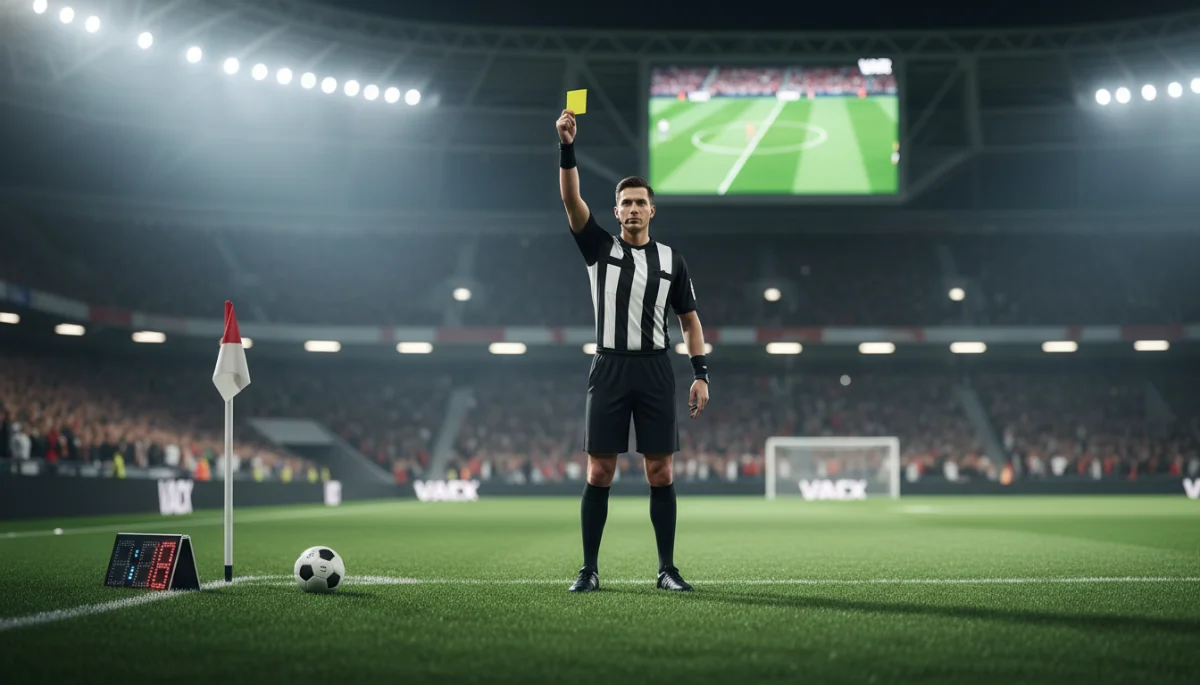
The 2026 FIFA World Cup is set to arrive with more than a larger field and fresh national storylines. It will also bring a revised set of match laws that could change how referees manage games, how teams behave under pressure, and how fans experience each match.
The main goals behind these updates are straightforward: keep play moving, cut down on delay tactics, tighten discipline, and give officials better tools for handling heated or confusing moments. In a tournament this big, even small rule changes can have outsized effects.
That matters because the World Cup is not only a show for talent. It is also one of the first major stages where several of these changes are expected to be applied together, creating a very different rhythm from what many viewers are used to.
What Is Driving the Changes?
Football’s rule makers have been working toward a version of the sport that feels quicker, cleaner, and easier to control. Some of the new measures are aimed at slowing down games less often, while others are meant to improve discipline and reduce the kind of behavior that creates confrontation or confusion.
The 2026 tournament is likely to be the most visible test of that approach. Coaches will need to prepare players for a stricter environment, and referees will be expected to manage more situations with clearer, firmer standards.
Discipline Gets Tougher in Heated Moments
One of the most talked-about updates involves players who cover their mouths during tense exchanges. Under the new interpretation, a player who shields their mouth with a hand, shirt, or arm during a confrontational moment may be shown a red card if the action appears intended to hide abusive or discriminatory language.
The key word is confrontation. This is not about harmless chatter or players briefly hiding a conversation from cameras. It is about situations where the covering action may be used to conceal offensive remarks or make it harder for officials to judge what was said.
The reason for the change is clear: authorities want a stronger response to behavior that may mask abuse. If a player thinks a covered mouth makes a comment invisible, this rule is meant to remove that protection.
Walk-Off Protests Are Being Targeted
Another major shift concerns teams or players who leave the field in protest after a referee’s decision. If a player walks off as part of a protest, the referee may issue a red card. Team officials who encourage that action can also face punishment.
The stakes can become even higher if the protest leads to the match being abandoned. In that case, the team responsible could lose by forfeit. That makes walk-offs a far riskier form of dissent than they may have been in the past.
The intent here is to stop protest tactics from turning into a form of use. Tournament organizers want controversial decisions handled through the rules, not through pressure that disrupts the match itself.
Restarts Will Face Stricter Clocks
Time-wasting at throw-ins and goal kicks has long irritated players, coaches, and supporters. The updated rules respond to that problem with a visible countdown designed to force quicker restarts.
For certain restarts, the referee will raise a hand and count down five seconds. If the ball is not put back into play in time, the team in possession will be penalized. On a throw-in, possession may be handed to the other side. On a goal kick, the punishment can be even more severe, with the opposition awarded a corner kick.
That last outcome is especially significant. A delayed goal kick will no longer be treated as a harmless pause. It could immediately create a dangerous attacking opportunity for the opponent, which should make slow restarts much less tempting.
Substitutions are also being tightened. Once the substitution board appears, the player leaving the pitch will have 10 seconds to exit and must do so at the nearest boundary point. If the player takes too long, the incoming substitute may have to wait before entering, which can leave the team temporarily short in the middle of a restart.
Medical Delays Will Be More Controlled
Another important adjustment concerns on-field treatment. If medical staff enter to help an outfield player, that player will generally need to leave the field for one minute after play resumes. The idea is to reduce tactical treatment breaks that are used to slow the game or interrupt momentum.
There are sensible exceptions, though. The rule is not meant to punish genuine danger or serious injury. It will not apply in situations such as a goalkeeper injury, a collision involving a goalkeeper and an outfield player, a collision between teammates that requires treatment, a serious injury including a possible concussion, or a player who is about to take a penalty.
These exceptions matter because the goal is not to make medical support harder to access. It is to stop minor stoppages from becoming a disguised form of game management.
The same logic extends to goalkeeper injuries. If a goalkeeper is being treated, players should not treat the pause as an invitation for a tactical meeting with coaches. The stoppage is for care, not an unofficial timeout.
VAR Will Have a Wider Safety Net
Video review is also expected to play a larger role. VAR first appeared at a World Cup in 2018, but the 2026 edition is expected to expand the range of situations in which it can help correct mistakes.
One important area is the second yellow card that leads to a red. If that dismissal is clearly wrong, VAR may intervene. That would mark a meaningful expansion, since second-yellow decisions have traditionally been outside the most common review categories.
VAR can also help with mistaken identity, such as when the referee cautions or sends off the wrong player. In those cases, the review system can correct the error and prevent an innocent player from carrying someone else’s punishment.
Some corner kick decisions may also be reviewed when the error is clear and can be fixed quickly. The same applies to fouls committed before a free kick or corner is actually taken. If an attacker fouls a defender during the setup phase, VAR may recommend an on-field review so the referee can apply the proper discipline and restart the play correctly.
That could make set pieces more carefully policed than before, especially in matches where teams rely heavily on blocking, holding, and physical movement to gain an edge.
What Fans and Teams Should Expect
For teams, the practical message is simple: habits that used to buy time may now cost goals, possession, or discipline. A slow restart could become a corner against you. A frustrated walk-off could become a red card. A hidden conversation in a heated exchange could suddenly carry major consequences.
For coaches, the challenge is preparation. Players will need to understand not only the wording of the new laws, but also how referees are likely to apply them in fast-moving tournament conditions. That includes discipline in confrontations, speed at restarts, and smarter behavior around treatment stoppages.
For fans, the changes may be noticeable almost immediately. Matches could feature more visible counting, firmer control of substitutions, and more intervention around set pieces and misconduct. Some of that may feel unfamiliar at first, but the aim is to create a game that is faster, fairer, and easier to manage from start to finish.