
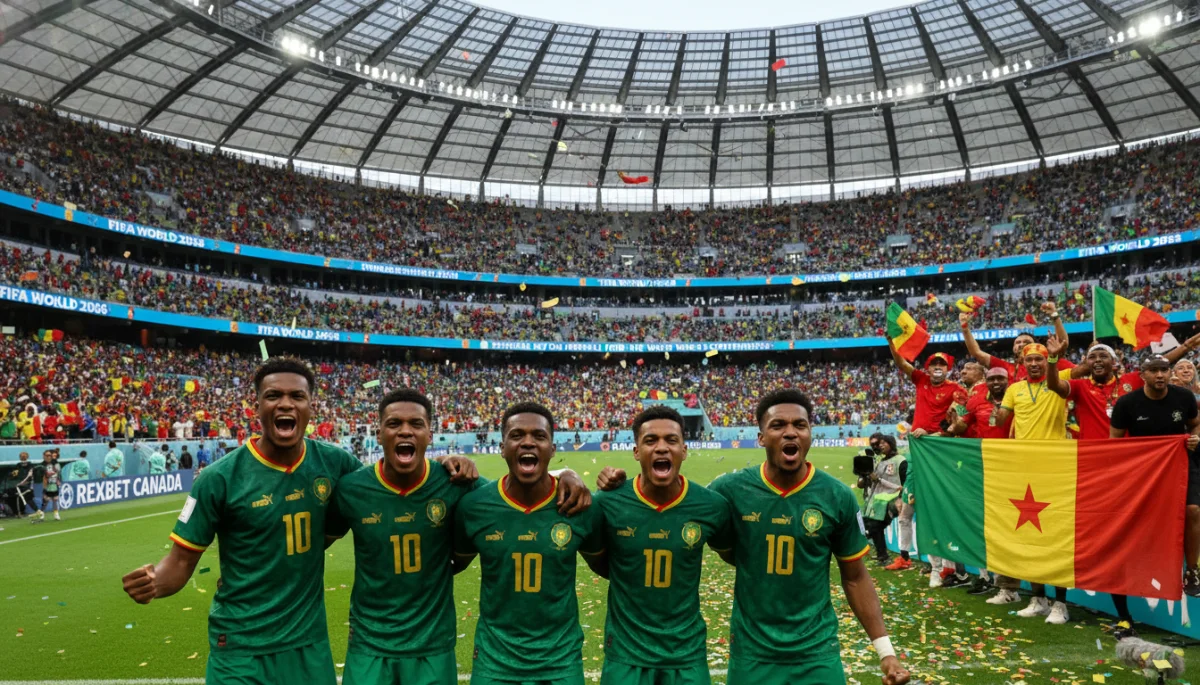
Senegal is no longer approaching the World Cup like a grateful outsider. It is arriving with the confidence of a team that expects to compete with the best, and head coach Pape Thiaw has been unusually direct about that standard. After a recent match, he said that if he ever doubted his ability to win the tournament with Senegal, he would walk away.
That kind of statement would once have sounded extravagant, but Senegal’s rise makes it easier to take seriously. The Lions of Teranga have become one of Africa’s most reliable powers, blending veteran leadership, tactical discipline, and a steady flow of elite youth talent. For anyone studying the Senegal World Cup 2026 prospects, the case for optimism is stronger than it has ever been. Canadians who want exposure to that story can bet on Senegal for the World Cup on Rexbet Canada, backing a side that now looks built for more than just a respectable run.

The Talent Pipeline That Changed Everything
Senegal’s success did not appear out of nowhere. It was built through a carefully organized football system centered on high-end academies such as Generation Foot, Diambars, and Dakar Sacre Coeur. These institutions combine coaching, schooling, and medical support, then feed promising teenagers into Europe’s top leagues at a remarkable rate.
The scale is striking for a country of roughly 20 million people. Senegal consistently produces elite players at a volume that rivals or exceeds larger African nations, and that output has helped reshape its reputation from hopeful participant to genuine contender.
- Generation Foot has become one of the continent’s best-known talent factories.
- Diambars and Dakar Sacre Coeur also play major roles in development.
- European clubs often identify players early and secure long-term access to the best prospects.
Why the System Also Feels Unequal
The same pipeline that powers the national team has also produced a harsh economic imbalance. Many academies depend on long-standing relationships with European clubs, which provide funding, but those partnerships also give overseas teams first access to the most valuable players. FC Metz’s support of Generation Foot is a well-known example, and it helped launch the careers of Sadio Mane, Ismaila Sarr, and Pape Matar Sarr.
The problem is that the money often accumulates far from Senegal. In one review of 13 academy-trained players selected for Senegal’s continental squads, the academies received only €100,000 in initial transfer fees, while the European clubs later sold those same players for a combined €81.2 million. Over their careers, those 13 players have generated more than €411 million in transfer fees.
That gap reveals the deeper cost of Senegal’s success. Local clubs struggle to remain competitive, domestic facilities remain underfunded, and the local league still lacks the visibility that would allow it to benefit fully from the talent it creates.
- European clubs capture most of the transfer profit.
- Local infrastructure receives far less investment than the talent deserves.
- Administrative mistakes can delay or weaken solidarity payments owed to Senegalese clubs.
The Diaspora Strategy Is Now a Core Advantage
Senegal has also become highly effective at recruiting dual-national players before other federations can secure them. The national setup now targets diaspora prospects in Western Europe at a young age, often between 16 and 19, when international choices are still open.
That approach combines practical planning with identity-based persuasion. The federation appeals to family ties, cultural memory, and the appeal of joining a winning environment. It has already paid off with players such as 18-year-old PSG forward Ibrahim Mbaye and 20-year-old Chelsea defender Mamadou Sarr, both of whom had previously represented France at youth level.
Those additions matter because they deepen Senegal’s pool without forcing the team to abandon its identity. Instead, the squad becomes a blend of homegrown schooling and international polish.
A Squad Built for One Last Push
Senegal’s current profile is unusual and dangerous. It can field seasoned leaders and teenage breakthroughs in the same lineup, which gives the team both stability and upside. Idrissa Gana Gueye, now 36, can still anchor a match while younger players add pace and unpredictability around him.
That mix makes the 2026 tournament feel like a decisive moment for the country’s golden generation. For Sadio Mane, Kalidou Koulibaly, and Edouard Mendy, this may be the last realistic chance to define their international legacy on the biggest stage.
What Makes Senegal Hard to Ignore
- Strong physical presence across the pitch.
- Clear tactical structure in major matches.
- Depth that allows the squad to withstand pressure.
- Experience from players who have already performed in elite European settings.
The Group Stage Will Reveal the Ceiling
Senegal’s path is not forgiving. Drawn into a difficult Group I with France, Norway, and Iraq, it will be tested immediately. The opener against France in New Jersey is more than just a first match; it is a measuring stick for whether Senegal’s confidence matches its reputation.
If the Lions of Teranga survive the group, they will have enough structure and power to bother almost anyone in the knockout rounds. Their discipline, athleticism, and depth give them a legitimate route into the later stages, even if the broader football economy behind them still needs major repair.
That is the central contradiction of Senegal’s rise: the national team has never looked more ready to win, while the system that produces it still leaves too many local institutions behind.